
'/%3E%3C/svg%3E)



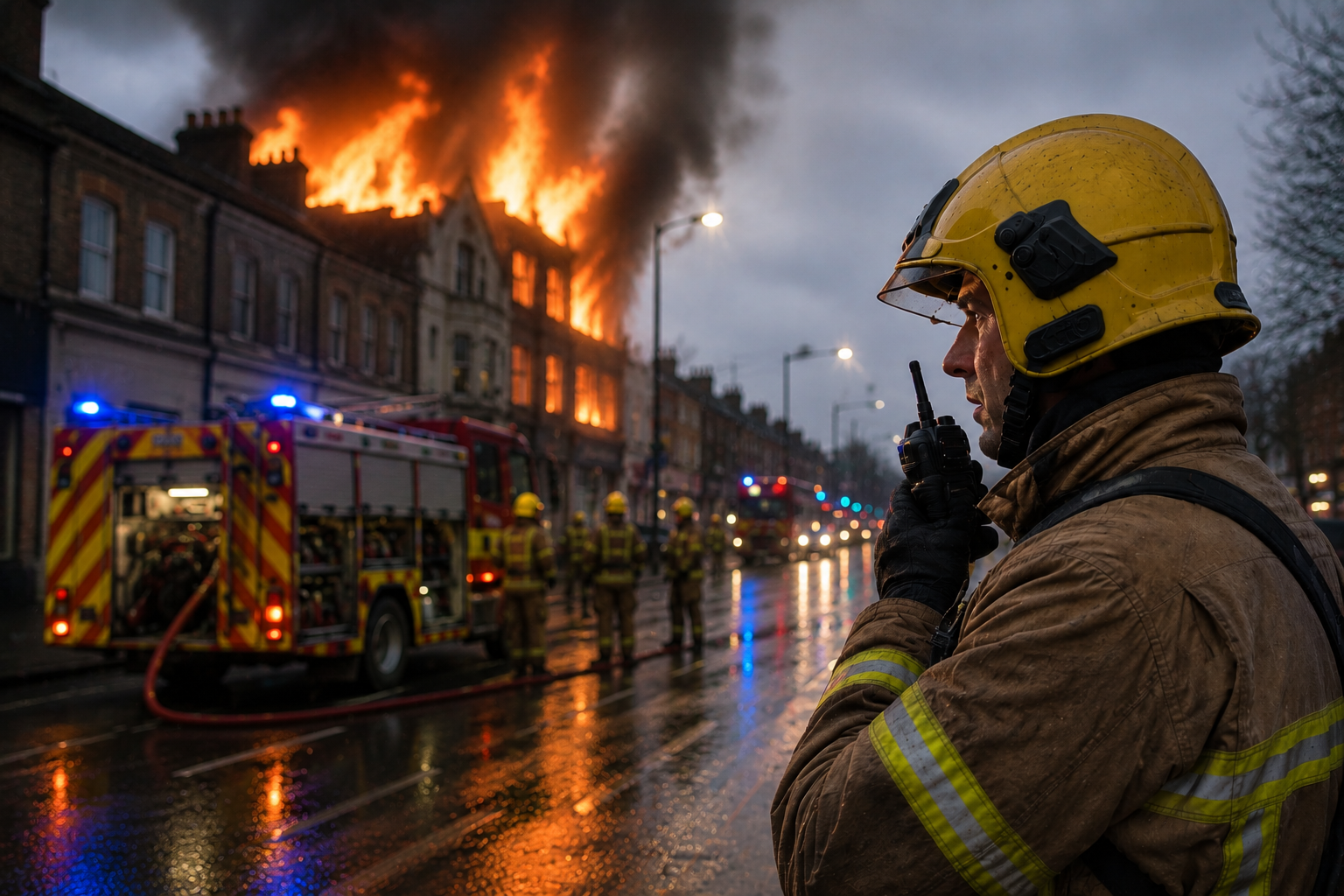
Fire & Rescue Services operate in some of the most fast-paced and high-pressure environments imaginable. From the moment a 999 call is received through to post-incident reporting and operational review, teams are required to capture, communicate, and process large volumes of critical information quickly and accurately.
Yet despite advances in operational technology, many documentation and reporting workflows across emergency services still rely heavily on fragmented systems, manual note-taking, duplicated data entry, and delayed reporting processes.
Modern voice capture workflow platforms are beginning to change this.
By combining secure voice capture, workflow automation, transcription, AI-assisted documentation, and structured reporting into a single ecosystem, Fire & Rescue Services can create a more connected, accurate, and efficient approach to incident documentation and operational intelligence.
Capturing the Full Emergency Journey
One of the biggest challenges within emergency response environments is that critical information is often spread across multiple disconnected systems and stakeholders.
During a major incident, information may originate from:
- 999 emergency calls
- Control room communications
- Radio transmissions
- Mobile updates from firefighters on-site
- Incident commander notes
- Specialist team updates
- Body-worn devices
- Post-incident interviews and evaluations
Each interaction contains valuable operational detail, but traditionally much of this information becomes fragmented, duplicated, or difficult to analyse later.
Voice capture workflows provide a way to centralise and structure this information more effectively.
From 999 Call to Structured Operational Record
Modern voice capture platforms can support the entire incident lifecycle.
Emergency Call Capture
999 call audio and dispatcher communications can be securely captured and linked directly to incident workflows, helping preserve accurate timelines and operational context from the very beginning of the emergency response.
This creates a stronger foundation for:
- Incident reporting
- Investigations
- Compliance requirements
- Training and operational review
- Cross-agency collaboration
Supporting Frontline Firefighters on Scene
Firefighters often need to capture information while operating in difficult and high-pressure environments.
Traditional written note-taking can:
- Slow workflows
- Increase administrative burden
- Reduce detail accuracy
- Delay reporting completion
Mobile voice capture allows frontline personnel to securely dictate:
- Site observations
- Hazard updates
- Resource requirements
- Casualty information
- Dynamic risk assessments
- Incident actions
This information can then flow directly into structured workflows and reporting systems.
Instead of relying on memory hours later, personnel can capture information in real time while events are unfolding.
Improving Radio & Operational Communication Workflows
Radio communications remain one of the most important operational tools within emergency response.
However, radio traffic can also become difficult to review manually after incidents, particularly during large-scale or multi-agency events.
Voice-enabled workflow platforms can support:
- Secure storage of radio communications
- Searchable transcripts
- Structured incident timelines
- AI-assisted summaries
- Faster operational reviews
This creates opportunities for:
- Better situational analysis
- Faster post-incident reporting
- Enhanced training exercises
- Improved operational transparency
Faster Incident Reporting & Reduced Administrative Burden
Post-incident documentation is one of the most time-consuming areas for operational teams.
Incident reports often require personnel to manually reconstruct events from:
- Memory
- Handwritten notes
- Radio logs
- Separate systems
- Emails and spreadsheets
Voice capture workflows simplify this process by automatically structuring captured information into draft reports and operational summaries.
This can help services:
- Reduce duplicated administration
- Improve reporting consistency
- Speed up report completion
- Free operational staff from unnecessary paperwork
- Improve data quality across the organisation
Supporting Operational Review, Research & Learning
The value of voice capture extends well beyond the live incident itself.
Captured operational data can support:
- Incident evaluation
- Internal investigations
- Training programmes
- Service improvement initiatives
- Fire prevention analysis
- Multi-agency learning exercises
Because voice workflows preserve richer operational detail, services gain access to more complete information for future research and continuous improvement.
Over time, this creates stronger organisational intelligence and more informed operational decision-making.
Enabling Multi-Agency Collaboration
Major incidents often involve coordination between:
- Fire & Rescue Services
- Ambulance Services
- Police
- Local authorities
- Specialist responders
Voice capture workflows can help create more connected communication and documentation processes across agencies by improving information accessibility and operational visibility.
This becomes increasingly important as emergency services continue modernising digital infrastructure and exploring integrated response models.
The Future of Emergency Documentation
As Fire & Rescue Services continue investing in digital transformation, voice capture workflows are becoming a key part of modern operational environments.
The ability to securely capture, structure, and process operational information from multiple sources in real time offers significant advantages across:
- Incident response
- Documentation
- Operational review
- Compliance
- Research
- Training
- Workforce efficiency
Rather than adding complexity, modern voice capture platforms help simplify workflows while improving the quality and accessibility of operational information.
For emergency services operating under increasing pressure, that can make a meaningful difference both on the frontline and behind the scenes.

Discover Diktamen for Emergency Services
Diktamen provides secure voice capture, workflow automation, and AI-assisted documentation solutions designed to support complex operational environments.
From frontline voice capture to structured incident workflows, Diktamen helps organisations modernise how critical information is captured, processed, and reviewed across the full emergency response lifecycle.